Abstract
From Tables 1 to 5 of the medical section of the Report on Public Health Administration (FY2024) I counted inspections, sanctions and criminal referrals under Article 25 of the Medical Service Act, supervision of medical corporations, assistant nurse licences issued and midwifery clinics, and matched them against the Economic Census (2021).
There were 25,678 inspections. Sanctions numbered 3 (0.0117%) and criminal referrals 3 — one sanction per 8,559 inspections.
Inspection density differs sharply by type of facility.
| Inspections | Establishments (Economic Census) | Rate | |
|---|---|---|---|
| Hospitals | 8,006 | 8,341 | 96.0% |
| General clinics | 11,492 | 82,728 | 13.9% |
| Dental clinics | 5,946 | 64,655 | 9.2% |
| Midwifery clinics | 234 | 2,984 | 7.8% |
Hospitals at 96.0% against general clinics at 13.9% — a 6.9-fold difference.
There are 2,984 midwifery clinics, but only 337 (11.3%) attend births. 2,647 (88.7%) do not. Six prefectures have no midwifery clinic attending births at all (Iwate, Akita, Yamagata, Shimane, Tokushima, Saga).
Supervision of medical corporations came to 24 actions nationwide in the year: 10 reports demanded, 12 inspections, 1 improvement order, 1 revocation of establishment approval.
7,190 assistant nurse licences were issued (84.9% to women).
1. Introduction
I018 found 27,227 staff (a cumulative count; 2,349 full time) watching food and environmental health. I020 found 431 failures among 95,546 food samples. I019 and I015 found zero sanctions for entertainment venues, barbershops and beauty salons.
Is medicine regulated differently?
How much are medical facilities inspected, and how many sanctions follow?
2. Data
| Inspections, sanctions, referrals, use permits | MHLW, Report on Public Health Administration, FY2024, Table 1 (by type of facility, national) and Table 2 (by prefecture). Medical section, during FY2024 |
| Supervision of medical corporations | Same source, Table 3 |
| Assistant nurse licences | Same source, Table 4 |
| Midwifery clinics | Same source, Table 5. As at end of FY2024 |
| Establishments and workers | MIC and METI, Economic Census 2021, 831 Hospitals / 832 General clinics / 833 Dental clinics / 834 Midwifery and nursing services |
| Population | MIC, Basic Resident Register, 1 January 2026 |
All 47 prefectures are present, and inspections and midwifery clinics reconcile exactly with the national row (25,678, 2,984, 337; all differences zero). The breakdown by facility type in Table 1 also sums to its total.
Only assistant nurse licences do not reconcile. The prefectural rows total 6,340 against a national 7,190; the difference of 850 is the "Kansai Union" row, listed separately from the prefectures in Table 4. Licences for the Kinki prefectures are recorded there, so no prefectural comparison of assistant nurse licences is made here.
3. Results
3-1 25,678 inspections, 3 sanctions
| During FY2024 | Count |
|---|---|
| Inspections | 25,678 |
| Sanction (staffing increase or suspension order) | 1 |
| Sanction (improvement order) | 1 |
| Sanction (change of manager) | 1 |
| Sanctions together | 3 |
| Criminal referrals | 3 |
| Use permits (new opening) | 280 |
| Use permits (structural change) | 5,037 |
Against 25,678 inspections, sanctions numbered 3 (0.0117%) — one per 8,559.
Use permits for structural change (5,037) outnumber those for new openings (280) 18 to 1. Far more is done to buildings that exist than to new ones.
3-2 Hospitals 96%, general clinics 13.9%
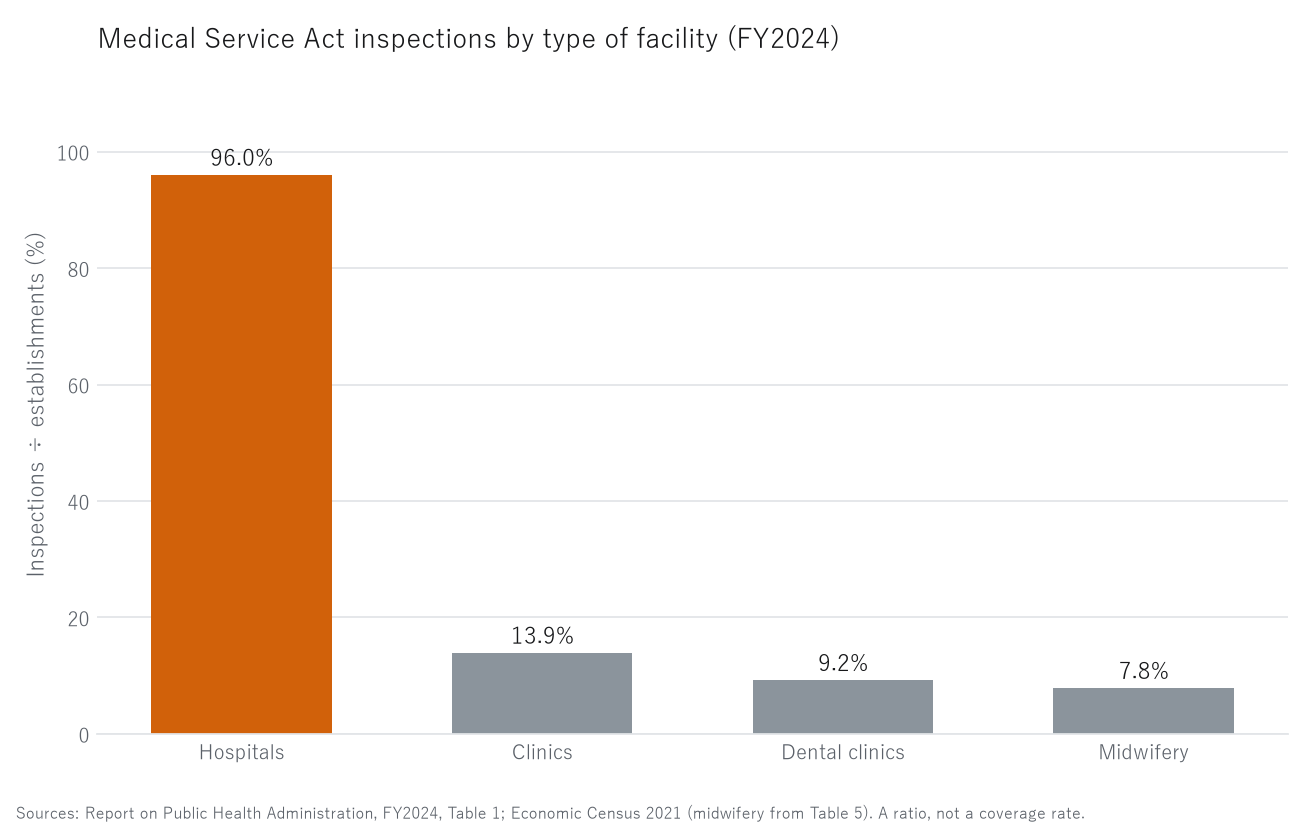
Figure 1. Medical Service Act inspections by type of facility (FY2024).
Inspections divided by establishments. Midwifery clinic counts come from Table 5.
| Inspections | Facilities | Rate | Workers per establishment (X001) | |
|---|---|---|---|---|
| Hospitals | 8,006 | 8,341 | 96.0% | 288.16 |
| General clinics | 11,492 | 82,728 | 13.9% | 12.66 |
| Dental clinics | 5,946 | 64,655 | 9.2% | 7.06 |
| Midwifery clinics | 234 | 2,984 | 7.8% | (834 is 11.94) |
Effectively every hospital is inspected once a year. General clinics are at 13.9%, a 6.9-fold difference.
Hospitals run on 288.16 workers per establishment, among the largest of the 526 subcategories; general clinics 12.66 and dental clinics 7.06.
3-3 Of 2,984 midwifery clinics, 337 attend births
| Midwifery clinics | 2,984 |
| Attending births | 337 (11.3%) |
| Not attending births | 2,647 (88.7%) |
Six prefectures have none attending births: Iwate, Akita, Yamagata, Shimane, Tokushima and Saga.
| Share attending births | |
|---|---|
| High | Okayama 33.3% (10/30) / Osaka 27.5% (38/138) / Aichi 26.6% (25/94) |
| Median | 9.1% |
Economic Census category 834 (midwifery and nursing services) holds 8,146 establishments (97,285 workers, 11.94 each, in 1,274 municipalities). 2,984 ÷ 8,146 = 0.37, but 834 also includes home-visit nursing, so the units differ.
3-4 Supervision of medical corporations: 24 actions a year nationwide
| During FY2024 (national) | Count |
|---|---|
| Reports demanded | 10 |
| Inspections | 12 |
| Improvement orders | 1 |
| Partial suspension | 0 |
| Full suspension | 0 |
| Recommendation to dismiss officers | 0 |
| Revocation of approval (Art. 65) | 1 |
| Revocation of approval (Art. 66) | 0 |
| Together | 24 |
The 12 inspections of medical corporations are 0.047% of the 25,678 Article 25 inspections of facilities.
They look at different things. Facility inspections examine structure, equipment and staffing; corporate supervision examines the business itself. The first visits nearly every hospital each year; the second happens 12 times.
3-5 7,190 assistant nurse licences
| During FY2024 | People |
|---|---|
| Men | 1,083 |
| Women | 6,107 |
| Together | 7,190 (84.9% women) |
The prefectural rows total 6,340; the difference of 850 is the "Kansai Union" row (11.8% of the national total). No prefectural comparison is made.
3-6 By prefecture
| Per 100,000 population | National | High | Low | Top ÷ bottom | Median |
|---|---|---|---|---|---|
| Inspections | 20.7 | Aomori 57.8 / Nagasaki 50.0 / Fukui 47.9 | Tochigi 7.1 / Saitama 5.7 / Niigata 5.1 | 11.25 | 23.0 |
| Midwifery clinics | 2.41 | Kyoto 6.84 / Shimane 6.78 / Shiga 5.64 | Chiba 1.11 / Niigata 0.96 / Fukushima 0.80 | 8.52 | 2.04 |
| Correlation (47 prefectures) | r |
|---|---|
| Inspections per 100,000 × population (log) | −0.243 |
| Midwifery clinics per 100,000 × population (log) | −0.241 |
3-7 Hokkaido and the Kushiro Subprefecture
| Hokkaido | |
|---|---|
| Inspections | 637 (0 sanctions / 0 referrals) |
| Use permits | 32 new / 196 structural change |
| Midwifery clinics | 78 (8 attending births, 10.3%; national 11.3%) |
| Assistant nurse licences | 194 |
| Per 100,000 population | inspections 12.7 (35th of 47) / midwifery clinics 1.56 (37th) |
Kushiro Subprefecture (Economic Census 2021):
| Municipality | 831 Hospitals | 832 General clinics | 833 Dental clinics | 834 Midwifery/nursing |
|---|---|---|---|---|
| Kushiro City | 18 | 66 | 81 | 13 |
| Kushiro Town | 0 | 8 | 9 | 3 |
| Akkeshi | 1 | 1 | 5 | 1 |
| Hamanaka | 0 | 1 | 1 | 1 |
| Shibecha | 1 | 0 | 2 | 1 |
| Teshikaga | 1 | 4 | 3 | 0 |
| Tsurui | 1 | 1 | 1 | 0 |
| Shiranuka | 0 | 4 | 4 | 1 |
| Total | 22 (5 municipalities) | 85 (7) | 106 (8) | 20 (6) |
Only dental clinics are present in all eight municipalities. Hospitals are in five, general clinics in seven. Shibecha has one hospital and no general clinic.
4. Discussion
4-1 Only hospitals are looked at every year
A 96.0% rate means in effect that every hospital is entered once a year. General clinics at 13.9% and dental clinics at 9.2% are far behind.
This is how the regime is designed. The Medical Service Act requires periodic inspection of hospitals; it does not require the same of clinics.
What is worth noting is the correspondence with size. Hospitals run on 288.16 workers per establishment, general clinics 12.66, dental clinics 7.06 (X001). The larger the facility, the more often it is looked at.
In food sanitation (I018), 2,769,361 establishments were covered by 8,558 inspectors regardless of size. In medicine, frequency varies with scale.
4-2 Three sanctions from 25,678 inspections
25,678 inspections produced 3 sanctions and 3 criminal referrals — one per 8,559.
Set beside the earlier figures:
| Denominator | Sanctions etc. | Rate | |
|---|---|---|---|
| Medical Service Act inspections | 25,678 | 3 sanctions | 0.0117% |
| Medicines retail (I014) | 2,633 dispositions | 6 revocations/suspensions | 0.063% |
| Barbershops and beauty salons (I015) | 385,747 premises | 0 closure orders | 0% |
| Entertainment venues (I019) | 4,826 premises | 0 sanctions | 0% |
| Food sampling (I020) | 95,546 samples | 431 failures | 0.45% |
In every field, the administration acting through sanctions is extremely rare.
This does not mean there were no problems. What an inspection finds is settled by guidance and correction on the spot; a sanction is the last resort when that fails.
Conversely, this statistic does not show guidance. What was said during 25,678 inspections appears in no table.
4-3 That 88.7% do not attend births
Of 2,984 midwifery clinics, 337 (11.3%) attend births. Nearly nine in ten do not.
Midwifery clinics may also provide antenatal checks, health guidance, postnatal care and breastfeeding support. What the name suggests and what is actually done differ.
Six prefectures have none attending births (Iwate, Akita, Yamagata, Shimane, Tokushima, Saga). There, giving birth at a midwifery clinic exists as a legal option but not as a real one.
This is the same shape as I016's special milk (52 kilolitres nationwide, three prefectures) and I009's public bathhouses (zero in Yamagata). A regime that exists nationwide but operates only in some places.
4-4 Twenty-four supervisory actions a year
Supervision of medical corporations came to 24 actions nationwide: 10 reports demanded, 12 inspections, 1 improvement order, 1 revocation.
Against 25,678 inspections of facilities, 12 inspections of corporations — 0.047%.
They look at different things. One examines premises under Article 25; the other examines governance. The first reaches nearly every hospital each year; the second happens twelve times.
4-5 That only dentistry reaches every municipality in Kushiro
Only dental clinics are present in all eight municipalities of the subprefecture (106 establishments). General clinics are in seven (85), hospitals in five (22), midwifery and nursing in six (20).
Shibecha has one hospital and no general clinic. A town of 6,698 people with a hospital but no clinic.
X001 found that the smaller a trade is per establishment, the more municipalities it is present in (r = −0.417). Dental clinics run on 7.06 workers, one 40.8th of a hospital's 288.16. Being small is why they are everywhere.
By R005's calculation, all eight municipalities lose at least 30% of their population by 2050. Hospitals, present in five municipalities, and dental clinics, present in all eight, need not fall alike. This paper does not make that calculation.
5. Limitations
- "Inspections" is the cumulative count of inspections under Article 25(1) of the Medical Service Act, not a count of facilities. Entering the same facility twice counts twice
- The rate is inspections ÷ Economic Census establishments. The dates are three years and ten months apart and the units differ (events against establishments). It is an indicator that can exceed 100%
- Hospital and clinic counts are Economic Census establishments, not the facility counts of the Survey of Medical Institutions
- Midwifery clinic counts come from Table 5; census category 834 also includes home-visit nursing
- "Criminal referral" means a violator found through administrative activity and referred under Article 239 of the Code of Criminal Procedure (Table 1, note 2)
- Assistant nurse licences are new issues during the year, not people in work
- Table 4 lists a "Kansai Union" row separately from the prefectures. Licences for the Kinki prefectures fall there, so no prefectural comparison is made
- The health register has no municipal table. The Kushiro Subprefecture is shown from the Economic Census
- What guidance was given during inspections appears in no table
- Few sanctions does not necessarily mean few problems
- A correlation indicates the strength of a relationship, not the direction of causation
6. How to reproduce
- Download Tables 1 to 5 of the medical section of the FY2024 Report on Public Health Administration from e-Stat (CP932)
- From Table 1 take inspections by type of facility (hospitals, general clinics, dental clinics, midwifery clinics)
- From Table 2 take the national row and the 47 prefectural rows (nothing below "designated cities (regrouped)")
- Divide by Economic Census establishments in subcategories 831, 832 and 833 for the rate; use Table 5 for midwifery clinics
- Take midwifery clinics and those attending births from Table 5 and compute the share
- Check Table 4 for the "Kansai Union" row. That is why the prefectural rows do not sum to the national total
Every figure in this paper is output by a single script (kensan_212). No intermediate value was copied by hand.
Scope of this paper
No new theory is claimed. Tables 1 to 5 of the medical section are counted and matched against the Economic Census. It shows 3 sanctions against 25,678 inspections, inspection rates of 96.0% for hospitals against 13.9% for general clinics (a 6.9-fold difference), 337 of 2,984 midwifery clinics attending births with six prefectures at zero, and 24 supervisory actions against medical corporations in a year nationwide. The rate is inspections divided by establishments and can exceed 100%. Few sanctions does not necessarily mean few problems. Correlations are reported; the direction of causation is not.
References and data sources
- Ministry of Health, Labour and Welfare, Report on Public Health Administration, FY2024, Tables 1 to 5 (Medical)
- Ministry of Internal Affairs and Communications and Ministry of Economy, Trade and Industry, Economic Census 2021, Tables 9-1A and 9-1B
- Ministry of Internal Affairs and Communications, Basic Resident Register population, 1 January 2026
- Yuuki Yamagishi, "Of 23,668 'Public Bathhouses', 2,730 Are Sento" (I009)
- Yuuki Yamagishi, "11,910 Shops Sell Medicines Online (12.8%)" (I014)
- Yuuki Yamagishi, "107,995 Barbershops and 277,752 Beauty Salons" (I015). Zenodo. https://doi.org/10.5281/zenodo.22878037
- Yuuki Yamagishi, "Milk Processed Differs 20,444-fold Top to Bottom" (I016). Zenodo. https://doi.org/10.5281/zenodo.22879076
- Yuuki Yamagishi, "27,227 on the Watching Side, of Whom 2,349 Are Full-Time" (I018). Zenodo. https://doi.org/10.5281/zenodo.22879207
- Yuuki Yamagishi, "1,468 Cinema Premises, and None at All in 82.1% of Municipalities" (I019). Zenodo. https://doi.org/10.5281/zenodo.22879269
- Yuuki Yamagishi, "95,546 Food Samples, 431 Failures (0.45%)" (I020). Zenodo. https://doi.org/10.5281/zenodo.22879317
- Yuuki Yamagishi, "How Many People Does a Trade Run On?" (X001)
- Yuuki Yamagishi, "How Many Trades Will Leave a Town by 2050?" (R005). Zenodo. https://doi.org/10.5281/zenodo.22877595
Version history
| Version | Date | Contents |
|---|---|---|
| 1 | 2026-09-22 | First release |
How to cite
Yamagishi, Y. (2026). 25,678 Inspections, 3 Sanctions — and of 2,984 Midwifery Clinics, 337 Attend Births [I021]. Zenodo. https://doi.org/10.5281/zenodo.22879344
(This DOI is the concept DOI; it always resolves to the latest version. Cite this one.)
© 2026 Yuuki YAMAGISHI
This work is licensed under a Creative Commons Attribution 4.0 International License (CC BY 4.0).
You may copy, adapt, redistribute and use it commercially, provided you give appropriate credit.
creativecommons.org/licenses/by/4.0
All figures and values in this paper were computed from official statistics. Rights in the underlying data remain with the publishing agencies.
Reference
Yamagishi, Y. (2026). 25,678 Inspections, 3 Sanctions [I021]. Zenodo.
DOI: 10.5281/zenodo.22879344
YOI: https://www.yamagishiyuuki.com/yoi/I021
ORCID: 0009-0006-8587-3450
PDF (English) · PDF (Japanese) · Date proof of the English PDF (OpenTimestamps .ots) · SHA256SUMS
The record page for this paper (in Japanese, with the PDFs in each language and the date proof): YOI I021. This paper is a preprint and has not been peer reviewed.